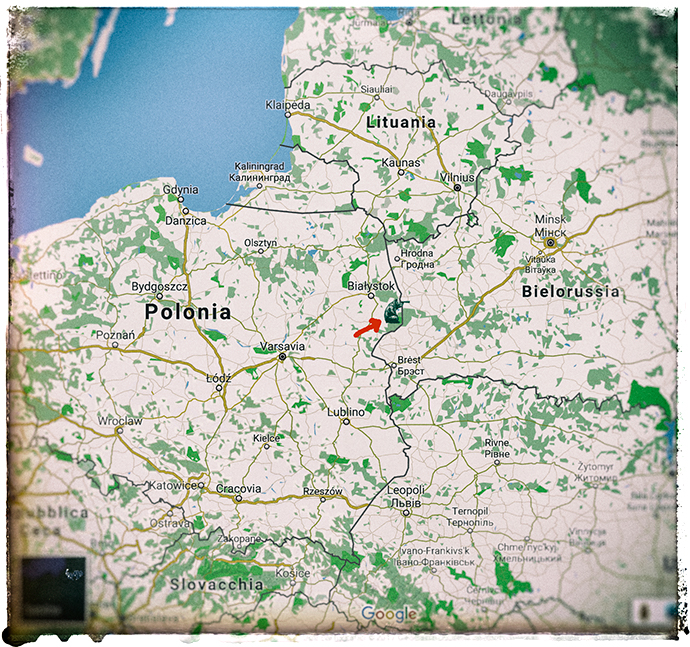
Per comprendere l’evoluzione delle foreste abbiamo bisogno di punti di riferimento, e Białowieża è uno dei pochi rimasti in Europa. La foresta di Białowieża, situata al confine orientale tra Polonia e Bielorussia, è fondamentale per molte ragioni: ecologiche, storiche, funzionali e scientifiche. È considerata una foresta primordiale, l’unica con queste caratteristiche nelle grandi pianure europee; una foresta “vergine” a latifoglie miste nel cuore dell’Europa! Rappresenta un museo vivente, offrendo uno sguardo su un paesaggio preistorico rimasto in gran parte preservato e intatto, mentre la maggior parte del territorio europeo è stata trasformata dall’arrivo dell’agricoltura circa 5.000 anni fa.
Cosa significa tutto questo?
Dobbiamo comprendere principalmente due fattori. In primo luogo, che gli ecosistemi attraversano diversi stadi, da quelli molto semplici a quelli altamente complessi, chiamati climax. Quest’ultima fase rappresenta l’apoteosi dell’organizzazione della vita, una meccanica ricchissima di interrelazioni e conseguenze funzionali.
Il secondo punto è che gli ecosistemi vengono spesso semplificati, in modo più o meno temporaneo (per cause naturali o meno), e oggi ciò accade soprattutto a causa dell’interferenza dell’elemento antropico e dei nostri valori. In un sistema che dà priorità all’estrattivismo, al consumismo e al profitto, il buon funzionamento qualitativo degli ecosistemi non è considerato una priorità (e spesso nemmeno si conoscono le conseguenze della degradazione). Un estrattivismo non sostenibile semplifica, degrada ed esaurisce i sistemi al di sotto del minimo naturale di funzionamento.
Immaginate un ecosistema come un corpo umano: la maggior parte dei paesaggi europei odierni appare come un prigioniero in un campo di concentramento, a malapena vivo, che dà più di quanto può ed è sempre sull’orlo del collasso. Questo stato si divide tra paesaggi degradati che hanno dato così tanto da non essere più produttivi (come molti nella regione mediterranea) e aree a produzione intensiva che producono ancora solo perché mantenute artificialmente con sostanze chimiche, tossiche (come gran parte delle grandi pianure europee).
Nei pochi luoghi in cui ciò non è accaduto, il sistema stesso è molto diverso da quello a cui siamo abituati nei paesaggi odierni, e Białowieża è uno di questi rari luoghi.
La struttura della foresta
Non tutta Białowieża è foresta e non tutta la foresta è uguale. Semplificando, possiamo dividere le aree forestali in due parti principali: quelle in evoluzione naturale, senza intervento umano diretto, e aree con intervento diretto, dove si pratica ancora la produzione di legname.
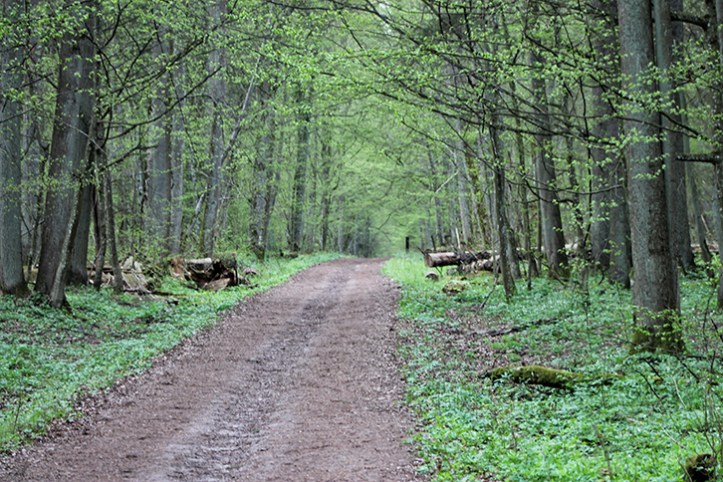
Nella fotografia un’area di foresta secondaria in recupero
Anche le aree in libera evoluzione non sono tutte uguali: si dividono tra foreste secondarie in recupero da diversi livelli di intervento storico (alcuni recenti, altri risalenti alla Prima Guerra Mondiale) e parti definite primordiali, ovvero che non hanno mai subito alcun intervento umano significativo! In queste zone (il nucleo del parco nazionale e riserva integrale), si può dire che l’ecosistema forestale sia antico quanto può esserlo naturalmente in questa regione, risalendo alla ricolonizzazione forestale post-glaciale in Europa. A seconda di quanto si voglia essere pignoli con la definizione, può trattarsi di una foresta di 16.000, 14.000, 12.000 o 8.000 anni! È un vero viaggio nel tempo, un luogo dove vedere i cicli della vita al massimo potenziale, dove imparare e restare incantati dalla sua bellezza e complessità.
Come guida naturalistica, mi sono sentito dire spesso: “Ma una foresta è solo un gruppo di alberi”. Questo è vero quanto dire che un corpo atletico e sano e quello di un paziente terminale in un ospedale sono “solo corpi”. Chiunque comprende la differenza tra un essere umano vigoroso e uno malato. Tutti conoscono la differenza tra l’ingegneria di una Ferrari e una vecchia Fiat 500 malfunzionante per incuria. Tuttavia, saper distinguere tra un ecosistema sano e vibrante e uno povero e semplificato è una capacità che non molti possiedono ancora.
Quali sono gli stadi dell’evoluzione forestale?
Per avere una foresta servono condizioni di base: suolo, clima, pioggia, semi, animali e tempo. 8.000 anni fa, le foreste dominavano il paesaggio europeo finché i primi agricoltori arrivarono dall’Anatolia e iniziarono a deforestare per coltivare e pascolare. Questo processo ha trasformato quasi completamente non solo l’Europa, ma gran parte del mondo.
Quando la semplificazione umana si ferma, subentra la successione ecologica: il pianeta sembra voler essere il più vivo e complesso possibile. In un clima temperato, il processo segue queste fasi:
- Stadio pioniero: È il momento della ricolonizzazione. Specie resistenti come licheni, muschi ed erbe iniziano a formare il suolo decomponendo i substrati minerali. Le specie che fissano l’azoto sono cruciali. Gradualmente appaiono arbusti e alberi che amano la luce: Rubus, Rosa, Ribes, Ulex, Genista, Cytisus, Prunus, Malus, Pyrus, Olea, Robinia, Ailanthus, Betula, Populus and Pinus, solo per nominare specie molto note Questo stadio dura circa 150 anni.
- Stadio intermedio: Man mano che i nutrienti si accumulano, arrivano specie più competitive e tolleranti all’ombra. Il suolo passa da una dominanza batterica a una fungina. Dopo 150 anni la foresta diventa “matura”, e dopo circa 500 anni diventa “old-growth”. (vecchia crescita). Qui dominano specie esigenti come Picea, Abies, Fagus, Quercus, Tilia, Taxus e Carpinus.
- Comunità climax: Infine, l’ecosistema raggiunge una comunità climax stabile dopo circa 1000 anni di evoluzione, quando la produzione e l’accumulo di biomassa si stabilizzano, e questo persisterà fino a quando non si verificherà un’altra grave perturbazione. In questa fase il livello di complessità, risorse, funzionalità e diversità è il più alto perché è la fase in cui esiste la maggiore quantità di possibilità e risorse: tutte le fasi precedenti coesistono contemporaneamente in un complesso sistema multistrato! In un terreno povero e compatto non molte specie sono in grado di vivere; quando il terreno è pulito, puro, ricco di nutrienti, ricco di invertebrati e microrganismi, ha un’elevata capacità di ritenzione idrica, la vita vegetale prospera e di conseguenza tutte le altre forme di vita. Il terreno è letteralmente la base per una buona vita! La volta della foresta non è uniforme, presenta numerose interruzioni che permettono alla luce di raggiungere il terreno, riavviando il processo ancora e ancora. In questa fase ci sono molti livelli e dimensioni di specie vegetali e fasi di vita e morte! Paradossalmente, Vita e Morte sono al loro apice in questa fase, quando l’una alimenta l’altra costantemente in modo equilibrato, in un’eterna danza di trasformazione della biomassa. In questa fase, a causa della complessità della foresta, possiamo osservare fianco a fianco specie del primo stadio come Rubus e Populus con specie più esigenti come Carpinus o Quercus, perché le condizioni del sistema consentono questa diversità.

Nella fotografia un’area interna della foresta, un ecosistema molto complesso
Come identificare la qualità di un ecosistema?
Innanzitutto, la natura non ama le monocolture: sono artificiali e non durano senza l’uomo. Se vedi alberi tutti della stessa specie, età e dimensione in file ordinate, sai che non è naturale.
Ecco come stimare – in modo naturalmente semplificato – i diversi livelli di qualità:
- Tundra o deserto: Vegetazione minima o assente. Clima estremo o suolo troppo degradato/tossico.
- Steppa o prateria: Solo piante pioniere (erbe). C’è potenziale, ma il sistema è stato semplificato di recente o manca acqua.
- Savana: Mix di aree aperte con arbusti e alberi. La foresta sta cercando di nascere, ma incendi o pascolo eccessivo la bloccano allo stadio iniziale (meno di 50 anni).
- Foresta giovane (fitta): Molti paesaggi mediterranei sono così. È densa, scura, con alberi tutti uguali, giovani e bassi. La biomassa è quasi tutta negli alberi vivi.
- Foresta complessa: Simile a una foresta subtropicale. Più specie, più insetti e funghi. Iniziano a esserci alberi vecchi e il suolo organico diventa più profondo.
- Foresta Primordiale (Climax): Un’esplosione di vita simile a una giungla tropicale! La biomassa è divisa equamente tra alberi vivi, alberi morti (legno morto) e suolo organico. È il massimo della funzionalità e della stabilità. Eccola, una vera foresta primordiale!
Testo di João Ferro Ferro, guida naturalistica a Białowieża
©Tutti i diritti relativi a testo e immagini sono riservati
ENGLISH VERSION
Forest evolution – From no forest until a climax forest
In order to understand forest evolution we need references and Bialowieza is one of the few references in Europe.
Why Bialowieza is important?
Bialowieza forest in the eastern border of Poland with Belarus is important for many reasons, ecological, historical, functional and scientifical.
It’s considered a primeval forest and the only one with this character in the great lowlands of Europe, a mixed-broadleaf, ”virgin” forest in Europe! It represents a living museum, offering a glimpse into a prehistoric landscape that has been largely preserved while much of Europe’s land has been transformed since the arrival of farming into Europe around 5000 years ago.
But what does this mean?
We have to understand mostly two factors. First, that ecosystems have different stages from very simple to higly complex, called climax. This last stage represents the apoteosis of life organization, like a very high, rich mechanics of interrelations and consequences of its functions.
The second part is that ecosystems are also very often for several reasons (naturaly or not) more or less temporarely simplified, nowdays mostly because of our present culture interference. This means that in a culture that gives priority to extractivism, consumerism and profit, the good quality funcioning of ecosystems in not considered as a priority or even known with all consequences that come from that. Non sustainable extractivism simplifies, degradates and exausts systems bellow the natural low minimum of funcioning and sustainability of ecosystems. Just imagine a ecosystem as a human body, most of the landscapes today in Europe look like a concentration camp prisioner, barely alive, giving more that they can and on the brink of colapse. This stage can be devided in between the degradated landscapes that gave for so long that they are no longer productive like so many in the Mediterranean region and intensive productive areas that are still giving but only because they are kept artificially with quimicals, barelly alive and toxic like most in the european great planes.
In the few places where this did not hapened the system itself is very diferent from what we are used to see in todays landscapes and Bialowieza is one of those rare places.
Not all Bialowieza is forest and not all the forest is the same. Simplistically here in Bialowieza we can divide the forest areas in two main broad parts: in natural evolution, without direct human intervention and areas with direct intervention where wood production is still done. The areas in free evolution are also not all the same and ruffly they can be divided between secondary forests in recovery from diferent types and levels of historical intervention, some very recently, others dating back to the first world war. Other parts can be defined as primeval, meaning they have never faced any kind of significant and direct human intervention! In this parts (the core and most important part of the forest and todays strict reserve of the national park), one can say that the forest ecosystem is as old as it can be naturaly in this region, dating back to the post glacial forest recolonization in Europe! Depending on how picky one want to be with forest definition, it can be 16000, 14000, 12000 or 8000 years old forest! It’s a real time travel to the past and the future, a place where we can see all major cycles of life in their full potencial and exuberance, where we can learn, appreciate and be mesmerized with its beauty and amazing complexity.
Many times has a nature guide I had people telling me but a forest is just a group ot trees. This is as much true as a healthy athletic body is from a terminal pacient in a hospital room are just bodies. Everyone can understand the diference between a beautiful, healthy, vigourous human beeing from an unhealthy one. Everybody knows the diference between the level of engeneering of a Ferrari from a poor Fiat cinquecento badly working from lack of care and maintenace in a corner of a city. But, knowing the difference between a healthy, vibrant ecosystem and a poor simplified one, not so many people will be able to diferenciate it and pay attention!
So what are the stages of forest evolution? What are the diferent levels of quality of a forest?
To have a forest, there is the need to have some basic conditions, soil, climate, rain, seads, animals and time to develope it. Most of Europe has the potencial to have forests in this present climatic moment with the exception of the extreams. 8000 years ago forests were overwelmingly dominating the european landscape until the first farmers arrived from Anatolia and started opening the forests to farm and graze their domestic animals. This was such a success that we transformed almost completly not only the landscapes of Europe but of most of the world.
When this kind of simplification stops one of the main rules on planet hearth takes over imediatly, it starts the process of evolution and complexification called by scientists the process of ecological succession. Its like if the planet wants to be as much alive and complex as possible permanently! Just imagine a portion of land not that much degradated, flat and uniform in a temperate climate. This process can take more or less time depending on climate conditions and the level of degradation but what hapens can be divided as follows:
- Pioneer stage: this is the moment of recolonization, of recovery, when the species present in the system are totally or mostly pioneer. These are often hardy organisms like liquens, mosses, grasses and forbes. They play a crucial role in breaking down mineral-rich substrates and initiating soil formation by adding organic matter as they grow and die. Nitrogen-fixing species are particularly important in these early stages due to limited nitrogen supplies in the new soil. With evolution and still inside of this stage light demanding bushes and trees start to colonize the area and becoming gradualy dominant. This stage in a temperate climate takes about 150 years to pass to the second stage and is dominated mostly by species of the genus, Rubus, Rosa, Ribes, Ulex, Genista, Cytisus, Prunus, Malus, Pyrus, Olea, Robinia, Ailanthus, Betula, Populus and Pinus, just to mention some species of bushes and trees well known for the majority of people.
- Intermediate stage: As soil develops and nutrients accumulate, they are gradually replaced by more competitive, demanding and shadow tolerant species. In this stage there is already some available organic matter in the ground and the soil starts to evolve from a bacteria dominated soil to a more fungae dominated soil, changing completely the ressorces available and the access to it for more demanding plants. Inside this stage there are two substages, first when the forest after 150 years of evolution becomes mature and after about 500 years when it becomes a old growth forest. This is the stage when more demanding species of plants start colonizing and dominating like, from the genus Picea, Abies, Fagus, Castanea, Quercus, Tilia, Taxus and Carpinus.
- Climax Community: Eventually, the ecosystem reaches a stable climax community after about 1000 years of evolution when biomass production and acumulation stabilizes, which will persist until another major disturbance occurs. In this stage the level of complexity, resources, functionality and diversity is the highest because it’s the stage where the bigest amout of possibilities and ressources exist, all the previous stages exist all together at the same time in a complex multi layered system! In a poor compacted soil not many species are able to live, when the soil is clean, purose, it’s full of nutrients, rich in invertebrates and microorganisms, has a high water retention capacity, plant life thrives and as a consequence all other forms of life. The soil is literelly the base for good life!
The canopy of the forest is not uniform, has many breaks allowing the light to reach the soil, restarting the process once again and again, in this stage there are many levels and sizes of plant species and stages of life and death! Paradoxically Life and Death are at they prime in this stage when one feeds the other constantly in a balanced manner in a eternal dance of biomass transformation.
In this stage because of the complexity of the forest we can see side by side species from the first stage like Rubus and Populus with mode demanding species like Carpinus or Quercus because the conditions of the system allow to this diversity.
Ok, but how can I identify the quality of an ecossistem and in what stage it is?
Well first of all, the planet earth does not want to have monocultures, this is completely artificial and will not last for too long without human interference and thats one aspect. If you see a monoculture of corn or pines in lines, all the same species, the same age and size, you know this is not natural and is by principle disfunctional. Sure there are diferences, its not so bad to have a pine plantation than a industrial potatoe farm, at least the time of harvest is slower and the amount of agro quimicals much lower allowing to some sort of basic conditions of life, but still very poor.
Lets picture the stages of evolution of ecosystems as the major hearth ecosystems for sake of visual simplification.
- If a landscape looks like a tundra or a desert with no plant life or just the bare minimum, a baren land, it’s in the most basic stage, it might mean that the climate is very hard or the use of the land has been unsustainable for too long or even worse is too toxic and poluted. No abundant biomass at all, if any.
- If the landscape looks like a esteppe or a prairie, ok here, the most basic and mostly pioneer plants like from the genus Graminea or Artimisia are able to live. There is potencial! But it’s still in a very early stage after the major simplification event or there is not enough water. The biomass is in the form mostly of grass and eventually grazing animals.
- When the landscape starts to look like a savana, a mix of open areas but with bushes and trees, then we know there is possibility to have a forest since trees are already present but still something is keeping it from evolving, or its very recent, normally less than 50 years, or there is a high level of consumption keeping the system simplified, or there are ocasional disturbance events keeping it in that stage, like fires. Here the biomass already includes wood but is still dominated by grasses and animals (if they exist).
- After the last stage trees start to dominate, it becomes finally a forest, like in so many Mediterranean landscapes. It’s dense, dark, the canopy is uniform, the tree diversity poor, with low complexety of structural diversity, and in general the trees are short and young. Here the biomass is mostly dominated by alive yong trees.
- Passing this last stage the forest becomes older and much more complex, it looks like a subtropical or monsoon forest, still not in the full potencial but geting there with more plant species, insects, fungae, birds and animals. The visual structure is more complex but still with very few openings in the canopy and low number of very old trees, limiting the visible amount of available organic matter in the system and complexity of oportunities. In this stage the biomass starts to be more divided between alive trees and organic soil.
- Finally the last stage, it’s an explosion of life, all is big, complex, abundant, moist and rich like in a tropical wet jungle! In this stage the biomass is more or less perfectly devided between alive trees, dead trees and organic soil. It’s the climax of total functionality of the system at its best! The ressources are present and abundant, keeping the system predictably stable and rich. That’s a Primeval Forest!
Please be aware this description is a simplification but I hope you will be able to start perceiving the diferent stages of evolution, age and quality of a forest by these few basic rules I provided you. I hope you enjoyed.
 Animal Trip